Direct from the Guangzhou manufacturing floor to the Port of Melbourne: heavy-duty commercial drop-stitch and thermo-welded PVC buoys designed to withstand southern oceanic salt-spray, dynamic Rip currents, and high UV indexes.
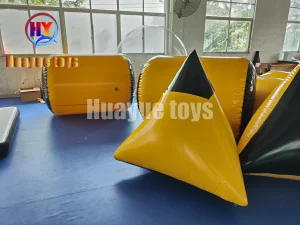
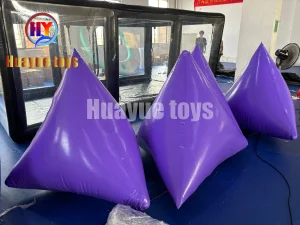
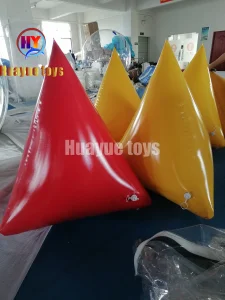
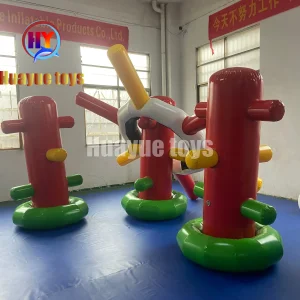
The Greater Melbourne metropolitan maritime footprint encompasses one of the most operationally demanding waterways in the Southern Hemisphere. Stretching across 1,930 square kilometers, Port Phillip Bay is characterized by a unique hydrological dynamic: a narrow ocean entrance known notoriously as "The Rip," coupled with expansive, shallow bathymetry where short-period, wind-driven chop frequently reaches 1.5 to 2.5 meters within minutes. From commercial cargo transits terminating at the Port of Melbourne—Australia’s premier container hub handling over 3.2 million TEU annually—to bustling municipal foreshores along St Kilda, Brighton, Frankston, and the Mornington Peninsula, the demand for precision water demarcation is paramount.
Historically, local harbor masters, yacht clubs (such as the Royal Melbourne Yacht Squadron and Sandringham Yacht Club), maritime civil engineering contractors, and event organizers have relied upon traditional rotationally molded polyethylene or steel-shelled buoys. While durable, rigid buoys introduce catastrophic logistical friction within Victorian operations: exorbitant handling and transport costs, massive warehouse footprints at Moorabbin or Dandenong industrial parks, severe hull-impact risks to composite racing vessels, and intensive vessel crane requirements for deployment and retrieval.
Furthermore, Melbourne’s extreme solar radiation regime—frequently exhibiting summer UV indices exceeding 11 to 14—accelerates polymer degradation, chalking, and seam embrittlement in inferior imported inflatables. Sourcing factory-direct from an established industrial fabricator possessing dedicated high-frequency welding lines and anti-hydrolysis PVC tarpaulin chemistry is the critical requirement for long-term operational success in Victoria.
Global marine infrastructure is undergoing a decisive shift toward high-tenacity, pneumatic elastomer solutions. Review how modern inflatable buoyancy systems surpass legacy hardware across life-cycle criteria.
Deflated, an entire 12-marker regatta course packs into the cargo bed of a single standard utility vehicle (ute) or onto standard Australian 1165×1165mm pallets, eliminating expensive flatbed transit charges from Melbourne ports.
Unlike rotomolded shells that crush vessel gelcoats or puncture thin racing hulls in regatta crowding at turning marks, pneumatic PVC buoys yield elastically under dynamic vector contact, absorbing up to 4,200 Joules of impact energy harmlessly.
Engineered with low center-of-gravity (CoG) integrated internal water ballast chambers or multi-point stainless steel 316 bridle assemblies, Huayue buoys maintain upright vertical orientation in 35-knot gale gusts and strong tidal shears.
Procuring commercial equipment for Australian territorial waters requires absolute adherence to maritime safety directives, material chemical safety, and municipal waterway guidelines.
All waterway demarcations within Port Phillip Bay and the Port of Melbourne operate under the International Association of Marine Aids to Navigation and Lighthouse Authorities (IALA) Region A buoyage protocol. Our factory executes customized chromatic compounding to exact RAL/Pantone marine chromaticity coordinates—ensuring high-conspicuity lateral mark greens, reds, and cardinal marker yellow/black bands comply with Marine Safety Victoria (MSV) and Parks Victoria navigation mandates.
Direct international procurement often challenges Victorian buyers with biosecurity (DAFF/AQIS), customs tariffs, and local freight logistics. As a primary manufacturer, Huayue Inflatables collaborates with dedicated Australian freight forwarders delivering seamless DDP (Delivered Duty Paid) consignments directly to your depot across Campbellfield, Laverton North, Braeside, or the Geelong waterfront.
From international regattas to heavy civil dredging, our pneumatic buoys are deployed across the most recognizable waterways in Southeastern Australia.
Hosting prestigious ocean events such as the Festival of Sails and state championship regattas. Our heavy-duty cylindrical and pyramid racing marks with internal ballast deliver stable windward-leeward configurations in 25-knot southerly blows without drifting off coordinate anchors.
Civil marine maintenance in the Yarra River channel and Hobsons Bay necessitates dynamic exclusion zones for trailing suction hopper dredgers. Rapidly deployable, high-buoyancy inflatable spar buoys provide prominent warning markers to recreational vessels and commercial barges.
High-turnover multisport events (e.g., 2XU Triathlon Series) demand swim turn markers that guarantee maximum participant safety, zero skin abrasion on brush contact, and fast turnaround inflation/deflation during dawn course setting.
Pioneering the intersection of marine material science and internet-of-things (IoT) sensing specifically for coastal Australian environmental surveillance.
Integration of titanium dioxide (TiO2) nanoparticles and thermal UV blockers inside 0.90mm–1.20mm thick polymer coatings, inhibiting photodegradation and salt crystallization under the Australian ozone depletion zone.
Hermetically sealed solar-rechargeable beacon modules fitted with Melbourne 4G/5G NB-IoT and LoRaWAN networks, delivering real-time sea surface temperature, wave swell frequency, and GPS drift alerts directly to harbor master terminals.
Transitioning toward 100% recyclable thermoplastic polyurethane elastomers derived from post-consumer recycled marine plastics, eliminating microplastic shedding into vulnerable Port Phillip dolphin and penguin biospheres.
Our Baiyun District, Guangzhou manufacturing plant spans 6,250 square meters of specialized industrial cleanrooms equipped with European-imported automated cutting tables, Miller Weldmaster hot-air welders, and high-frequency RF dielectric welding machines. Every buoy manufactured for the Australian export channel undergoes a rigorous 5-stage quality audit:
Every sealed pneumatic bladder is pressurized to 1.5× working operational pressure (typically 3.5 to 4.5 PSI) and monitored using digital barometric data loggers to ensure zero pressure decay over a 72-hour window prior to deflation and boxing.
Destructive test samples from each production roll verify seam peel strengths exceeding 3,200 N per 5 cm, guaranteeing that molecular thermal fusing remains impenetrable under hydraulic surge stresses in ocean surf.
Detailed operational guidance regarding material resilience, mooring calculations, custom branding, and import logistics for Victoria.
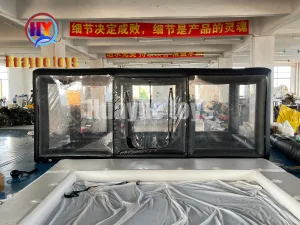
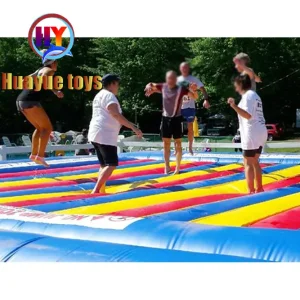
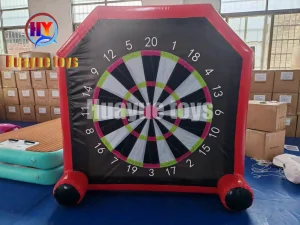
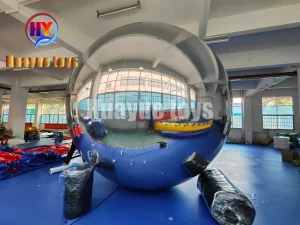
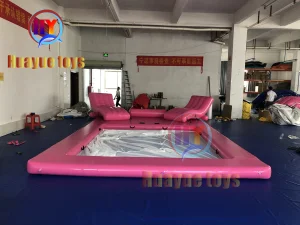
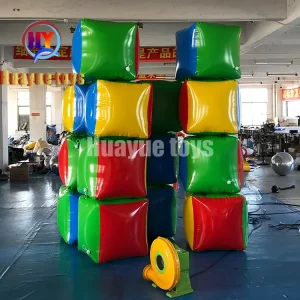
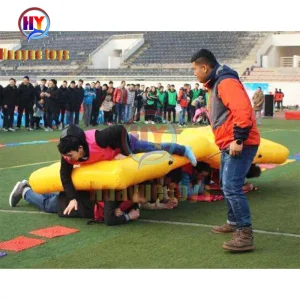
Engineered with identical commercial-grade polymers and hot-air welded seams, explore our multi-purpose inflatables serving Victorian marinas, seaside exhibitions, and waterfront resorts.
Connect directly with Guangzhou Huayue's engineering team. Obtain custom 3D parametric renderings, IALA Region A compliant color profiling, and certified container-direct pricing dispatched to the Port of Melbourne.