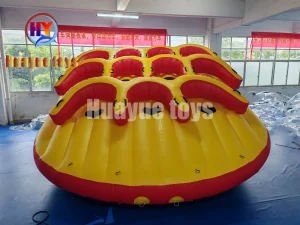
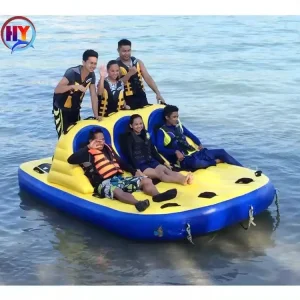
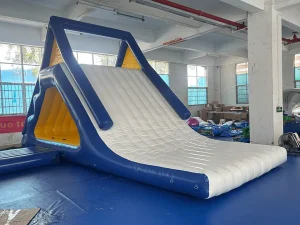
Featured commercial water recreation systems deployed extensively across Gyeonggi-do lakes, Busan bays, and Gangwon leisure zones.
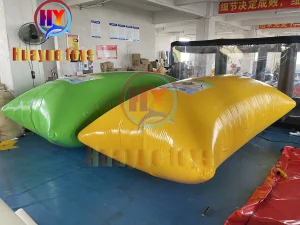
An authoritative analysis of South Korea's waterfront recreation economy, seasonal surge behaviors, regulatory safety statutes, and engineering demands.
Gapyeong-gun, Bukhan River, and Cheongpyeong Lake represent the epicenter of South Korea's inland floating water sports sector. With domestic tourism prioritizing "Staycation" and experiential water activities, modular floating aqua obstacle courses have evolved from novelty attractions into essential multi-thousand-visitor-per-day economic drivers requiring high-density, anti-abrasion polymer fabrics.
Navigating commercial aquatic deployments in South Korea requires alignment with stringent municipal watercraft safety acts and Korea Consumer Safety frameworks. Our production integrates reinforced 0.9mm UV-resistant German/European standard PVC tarpaulin with EN ISO 25649 certifications, delivering certified tensile strength, anti-mildew treatment, and multi-chamber security valves demanded by Korean insurers.
Korea experiences extreme thermal variations, from hot, humid summers reaching 38°C with intense solar radiation and monsoon downpours to sub-zero winters. Commercial floating water parks must withstand heavy cyclic pressure expansion during midday heat without seam delamination, alongside rapid deflation, anti-freeze flexibility, and compact storage capabilities during low seasons.
Addressing the shifting paradigm from rigid, capital-intensive concrete water parks to modular, eco-friendly floating aqua ecosystems.
Every park layout custom-designed for Korean operators undergoes digital wind-shear calculation and hydrodynamic current modeling. This mitigates anchor drag on tidal coastal sites such as Jeju Island or Gangneung, while optimizing visitor routing, safety perimeter barriers, and lifeguard vantage sightlines.
Modern coastal environmental zoning laws in Korea discourage permanent concrete construction on beaches and shorelines. Floating modular systems require zero heavy earthwork or seabed excavation. Using non-destructive helical screw anchors and underwater elastomeric bungee tensioners, installations respect local marine biomes.
Commercial inflatable water parks deliver an unparalleled CAPEX-to-revenue ratio compared to fixed leisure developments. With setup periods spanning under 7 business days and expandable modular connectivity, Korean operators routinely recoup initial capital outlays within a single 60-day summer operational window.
Continuous thermal-bonding innovation ensuring commercial survival across demanding marine and freshwater venues.
Custom triple-layer polyester mesh matrix coated with high-purity PVC film, formulated with UV stabilizers specifically tuned to combat high solar reflectivity over water surfaces.
Eliminating chemical glue degradation entirely. Seams are joined via automated European hot-air welding machines at precise micro-controlled temperatures, guaranteeing molecular-level bonding.
All anchor D-rings, grab handles, and high-impact step junctions feature secondary interior and exterior structural gussets tested to withstand 5,000 N pull forces under sudden wave loads.
Every commercial module undergoes continuous 72-hour high-pressure chamber inflation testing prior to packaging to ensure absolute zero micro-porosity and certified seam integrity.
Engineered for high-throughput resort environments, commercial river drift centers, luxury hotel waterfronts, and beach installations across Korea.
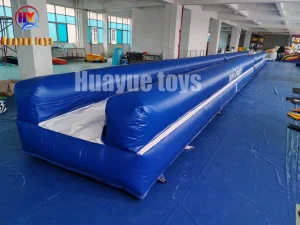
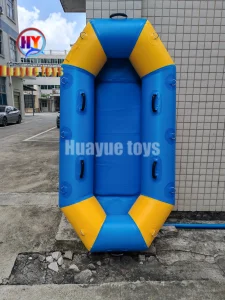
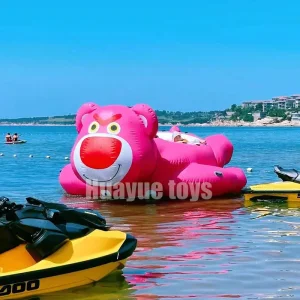
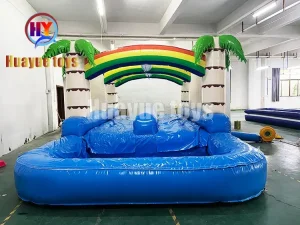
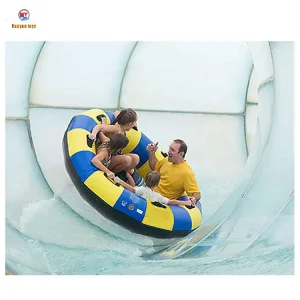

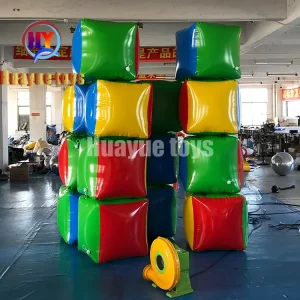

Direct answers addressing voltage compliance, anchoring on Korean reservoirs, Korean KC verification, and international freight logistics.