Engineered for high-throughput resort environments, lake concessions, and commercial beach fronts across Bali, Lombok, and the Riau Islands.
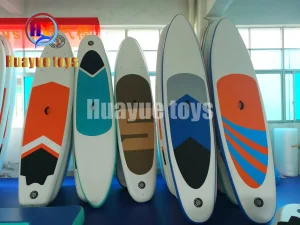
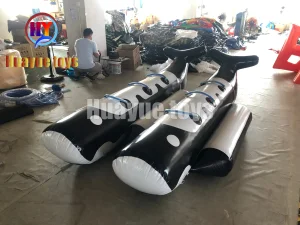
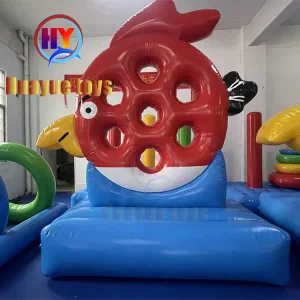
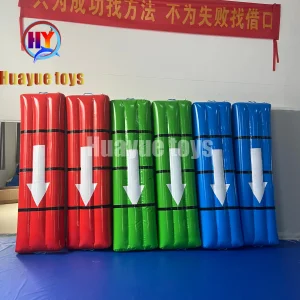
The archipelagic architecture of Indonesia represents one of the world's most dynamic frontiers for maritime leisure, ecotourism, and commercial outdoor recreation. Driven by government-backed infrastructural initiatives such as the "10 New Balis" program (spanning destinations like Lake Toba, Mandalika, Labuan Bajo, and Likupang), there is an unprecedented surge in demand for non-permanent, environmentally compliant amusement installations. Commercial-grade sport games—ranging from modular offshore water parks to corporate team-building obstacles—have emerged as the preferred capital asset for resort operators seeking agile return-on-investment without causing irreversible environmental degradation to delicate coral or coastal ecosystems.
Historically, Indonesian recreational operators relied on disparate domestic retail intermediaries offering lightweight, residential-spec equipment. These products frequently failed under the aggressive tropical stressors of Southeast Asia: persistent saltwater corrosion, thermal cycling spikes up to 45°C on dark membranes, and severe ultraviolet (UV) degradation. Today, the institutional market is shifting rapidly toward direct factory sourcing models. Professional operators in Nusa Dua, Canggu, Batam, and the Thousand Islands are mandating stringent industrial benchmarks: ISO-compliant high-frequency radio welding, heavy-duty 1000D/1100D polyester scrim cores, and EN 14960 structural validations to mitigate enterprise operational liabilities.
Globally, the commercial sport game and pneumatic equipment manufacturing sector is transitioning from craft-based manual gluing toward automated, high-precision thermodynamic assembly lines. In established leisure markets across North America, the Mediterranean, and Australia, regulatory frameworks like ASTM F2374 and EN ISO 25649 have established high safety baselines. In response, modern production facilities must engineer products capable of withstanding dynamic tensile stress, violent wave impacts, and high user throughput.
Furthermore, the convergence of algorithmic 3D CAD modeling with CNC mechanical cutting ensures dimensional precision down to 0.1 mm, preventing asymmetrical stress concentrations along heat-welded seam boundaries. This engineering rigor directly benefits importers in tropical regions like Indonesia. By leveraging thermal fusion seam construction over solvent glues—which deteriorate under prolonged exposure to humidity and saltwater—our high-frequency manufacturing protocols ensure airtight integrity, reduced maintenance overhead, and a structural lifespan up to three times longer than traditional methods.
Overcoming the technical and physical challenges of equatorial UV-index extremes, ocean currents, and high-salinity maritime exposure.
Membranes formulated with titanium dioxide nanoparticles and hindered amine light stabilizers (HALS), preventing photo-oxidation, embrittlement, and color bleaching under extreme Indonesian UV exposure.
Utilizing high-temperature European hot-air and radio-frequency welding rather than toxic chemical cements. Seams chemically fuse base plastics into a single monolithic layer that will not delaminate in tropical humidity.
Every dynamic tow point, tie-down loop, and ocean-bottom tether utilizes acid-resistant 316-grade stainless steel hardware, rated for multi-ton tensile loads and completely immune to marine salt oxidation.
| Engineering Parameter | Commercial Marine Spec (Huayue Export Standard) | Standard Market Grade (Local Domestic Retail) | Operational Benefit in Indonesia |
|---|---|---|---|
| Base Fabric Density | 1000D × 1000D High-Tenacity Polyester Core | 500D – 840D Standard Nylon/Polyester | Resists puncturing from coral debris and coarse sand friction. |
| Membrane Thickness | 0.90 mm (1100 g/m²) Marine Formulated PVC | 0.45 mm – 0.55 mm Light PVC Tarpaulin | Withstands high-pressure impacts, wave shear, and continuous guest traffic. |
| Seam Assembly Method | Dual-Band Overlap Thermal Fusion (No Solvent) | Single-Overlap Glue Contact Adhesive | Zero glue failure in 90%+ relative humidity and sea-spray zones. |
| Tensile Breaking Strength | >3200 N / 5cm (Warp & Weft Rated) | ~1600 N / 5cm Conventional Rating | Prevents catastrophic seam rupture under speedboat towing stresses. |
| Operating Temp Range | -20°C to +75°C (Maintains Dynamic Flexibility) | 0°C to +45°C (Prone to Softening & Bursting) | Eliminates risk of seam blowouts during tropical midday thermal expansion. |
Custom-engineered sport game infrastructures tailored to the business models of modern Indonesian leisure enterprises.
Primary Hubs: Seminyak, Uluwatu, Canggu (Bali), and Gili Trawangan.
Deploying water walking balls, obstacle wipeout setups, and heavy-duty towables designed for high-turnover beach-club day passes. Products emphasize eye-catching visual design to maximize organic social media engagement.
Primary Hubs: Greater Jakarta (Jabodetabek), Surabaya, Bandung.
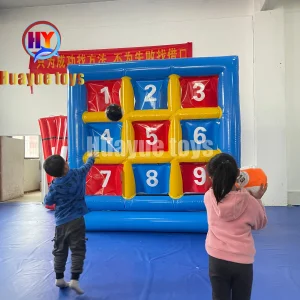
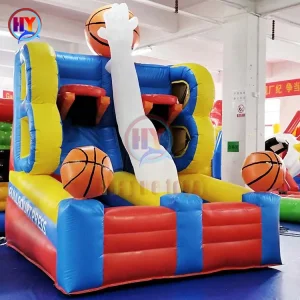
Indoor climate-controlled target sports, interactive 9-grid games, dual basketball shooting arrays, and inflatable obstacle raceways. Engineered with fire-retardant EN 71-2 compliant coatings for strict mall fire codes.
Primary Hubs: Puncak, Bogor, Yogyakarta, Lake Toba.
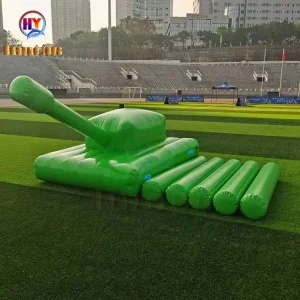
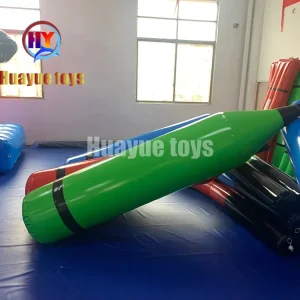
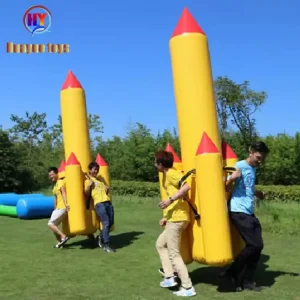
Heavy-duty, low-impact team-building equipment such as inflatable tank rollers, giant pencils, and synchronized group platforms. Products set up quickly in rugged outdoor settings without damaging local terrain.
Balancing operational longevity, environmental stewardship, and return on investment for long-term fleet deployments.
Indonesia's Ministry of Tourism and Creative Economy (Kemenparekraf) continues to tighten environmental standards for coastal and inland water operations. In response, modern inflatable sport game architectures provide a low-impact alternative to fixed concrete or steel piers. With zero seabed dredging, modular mooring lines, and anchor pads that distribute loads evenly, these systems preserve marine flora and reef structures. Furthermore, our raw PVC membranes comply with RoHS and REACH standards, ensuring they remain free of toxic heavy metals, lead additives, and banned phthalates.
While low-cost residential inflatables may initially seem budget-friendly, commercial operators often face high lifetime costs due to rapid seam degradation, blower motor burnouts, and downtime from leaks. Investing in verified commercial-grade equipment reduces overall ownership costs. Standardized modular designs allow damaged segments to be unzipped and repaired on-site using supplied patch kits, eliminating the need to take down the entire attraction.
Importing commercial pneumatic installations into Indonesian ports—such as Tanjung Priok (Jakarta), Tanjung Perak (Surabaya), or Benoa (Bali)—requires compliant documentation and reliable logistics. Sourcing directly from our Guangzhou facility offers significant logistical advantages:
Critical engineering, regulatory, and supply chain insights for project managers and procurement officers.
Engineered for high visitor throughput, rental fleets, team-building parks, and commercial event venues.