Factory-direct aquatic equipment engineered with reinforced 0.90 mm PLATO PVC tarpaulin, computerized thermo-welded joints, and multi-chamber compartmentalization for high-traffic operations.
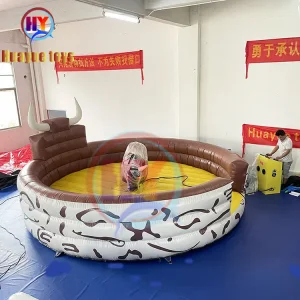
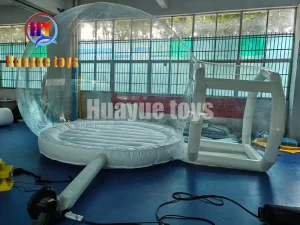
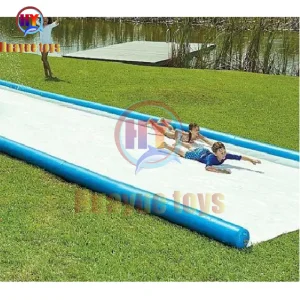
The transformation of water-based inflatables from seasonal leisure toys into capital-intensive, high-yield floating hospitality and sports assets.
Over the past decade, the global commercial water park and marine leisure sector has evolved rapidly. Driven by the expansion of waterfront hospitality, eco-tourism resorts, and superyacht charter operations, the demand for inflatables in the water has experienced an annual compound growth rate (CAGR) surpassing 7.5%.
Commercial operators no longer view inflatables as low-barrier seasonal novelties. Instead, they treat them as modular floating infrastructure capable of generating measurable return on investment (ROI) within 60 to 90 operational days. Modern floating aquaparks draw thousands of daily active users, creating a high-yield recreation ecosystem with low land-use impact and high operational flexibility.
The operational landscape has tightened globally. International standards such as EN ISO 25649 (floating leisure articles for use on and in water) and EN 14960 (inflatable play equipment) define clear benchmarks for entrapment risk mitigation, material rupture thresholds, tethering point tensile forces, and emergency egress routing.
Municipal authorities, resort risk management committees, and maritime insurers now mandate full compliance documentation, third-party lab certifications, and non-destructive hydrostatic testing before issuing operational permits. Suppliers who rely on basic glued joints and consumer-grade PVC are rapidly being excluded from commercial procurement pipelines.
The industry is moving decisively toward minimalist, architectural, and eco-integrated aesthetics. Yacht owners and high-end luxury resorts reject overly bright, generic colors in favor of customized tone-on-tone palettes, textured non-slip decking, and integrated shadow lines.
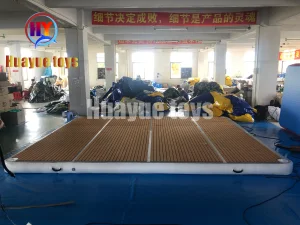
At the engineering level, the integration of drop-stitch double-wall fabric (DWF) has bridged the gap between flexible inflatables and rigid platforms. Inflated up to 15–20 PSI, these drop-stitch structures achieve rock-solid rigidity, serving as yacht beach-clubs, stable tender docks, and elevated sun-loungers without the weight or hazard of traditional aluminum docks.
How commercial resort buyers, yacht captains, and aqua park operators evaluate suppliers to ensure operational reliability, passenger safety, and capital protection.
For large-scale B2B buyers, initial capital expenditure accounts for less than 40% of total lifecycle equipment costs. The remaining 60% is dictated by maintenance, deflation downtime, puncture repairs, UV-induced delamination, and seam leakage.
Purchasing cheap, chemically unstable PVC units results in micro-porosity issues, fungal growth inside sealed air chambers, and frequent seam splits under extreme solar radiation. Professional procurement directors evaluate suppliers based on 5-year warranty degradation curves, puncture-resistance ratings (DIN 53356), and the accessibility of modular field repair systems.
Marine inflatables operate in punishing environments. They face relentless exposure to concentrated ultraviolet radiation, high-salinity seawater, ozone, and chlorinated pool chemistry. In tropical or desert resort zones, surface temperatures on dark-colored PVC can exceed 75°C (167°F).
Advanced suppliers integrate high concentrations of hindered amine light stabilizers (HALS) and anti-fungal treatments into their PVC formulations. This preserves polymer elasticity, prevents plasticizer migration, and protects against brittle fractures and tacky surface degradation across years of continuous deployment.
A water park module or yacht slide is subject to severe kinetic forces: wind shear across high vertical profiles, tidal surges, underwater drag, and concentrated dynamic rider loads. A poorly engineered anchoring tab can tear under sudden wave surges, creating catastrophic equipment loss.
Industrial procurement criteria mandate heavy-duty 316 marine-grade stainless steel D-rings welded to multi-layered backing plates with minimum breaking strengths of 2,500–5,000 N. Suppliers must provide precise bathymetric tethering layouts and tether tension calculations tailored to specific lakebed or seabed geologies.
| Evaluation Parameter | Consumer-Grade Inflatables | Commercial Marine Standard (Huayue Factory) | Procurement Impact / Operational Benefit |
|---|---|---|---|
| Base Fabric Core | 500D Polyester (Low Tensile) | 1,000D / 1,100D High-Tenacity Polyester (PLATO) | Prevents catastrophic burst tears under sudden impact drops. |
| Fabric Thickness & Weight | 0.45 mm – 0.60 mm (450 g/m²) | 0.90 mm Marine Grade (1,100 g/m²) | Resists shell punctures, oyster scrapes, and rough dock abrasion. |
| Seam Fusion Technology | Solvent Cold-Gluing (Degrades in UV) | European Thermal RF & Hot-Air Molecular Welding | Creates airtight structural fusion that will not soften under 70°C sun. |
| Fasteners & Tether D-Rings | 304 or Galvanized Steel (Rusts in sea) | Solid 316 Marine Stainless Steel (Multi-Layer Gussets) | Zero saltwater corrosion; handles severe tidal loads up to 5,000 N. |
| Air Pressure Monitoring | Single chamber / Generic plug | Multi-Chamber Isolation + Automated Relief Valves | Prevents explosive over-pressurization during peak midday heat. |
Inside the 6,250 m² Guangzhou Huayue manufacturing facility: CAD precision, computer-guided laser cutting, automated thermo-bonding, and stringent quality control protocols.
Every commercial water structure begins with detailed engineering modeling in Rhino and SolidWorks. Before fabric is cut, our design team produces photorealistic 3D renderings and finite element stress simulations (FEA).
Clients review accurate dimensions, buoyancy distribution, rider sightlines, and corporate branding positions. Production initiates only after explicit client sign-off, ensuring that custom yacht slides and modular lake parks fit their target vessels and water boundaries with zero dimensional variance.
Huayue utilizes imported European automated hot-air welding and high-frequency sealing machinery. Unlike manual solvent gluing, automated thermo-bonding melts PVC coatings together at the molecular level, creating a unified bond stronger than the base fabric itself.
Digital temperature, speed, and pressure controls eliminate human error, ensuring consistent seam width and peel resistance along continuous 20-meter seams. This approach minimizes the risk of pinhole leaks, seam delamination, or structural failures during peak seasonal operations.
Every finished unit undergoes a mandatory 48-hour continuous inflation test. Pressure gauges monitor barometric fluctuations to identify micro-drops in air pressure, and high-stress points are inspected using ultrasound and soapy solution diagnostics.
Our workshop is situated in Baiyun District, Guangzhou, just a 15-minute drive from Guangzhou Baiyun International Airport (CAN) and close to major container ports (Nansha, Shenzhen, Hong Kong). This strategic location enables streamlined, factory-direct CIF and DDP air or sea shipments to global destinations.
Technical breakdown of polymer cross-linking, tensile modulus, and hydrodynamic balance in marine inflatable engineering.
Our commercial-grade water equipment uses 0.90 mm, 1100 g/m² PVC tarpaulin with an internal 1000D×1000D high-tenacity polyester woven scrim. This creates a dense grid structure providing exceptional tear resistance (warp: ≥380N, weft: ≥350N) and tensile strength (warp: ≥3300N/5cm, weft: ≥3100N/5cm).
Both sides are coated with an airtight PVC paste compound enriched with UV inhibitors, flame retardants (B1/M2 compliant), and plasticizer stabilizing agents. This configuration prevents chemical degradation caused by prolonged marine submersion and aggressive solar exposure.
Drop-Stitch Double Wall Fabric (DWF) enables flat, rigid floating structures. Millions of high-strength polyester threads link the top and bottom substrate surfaces at uniform lengths, from 10 cm to 30 cm.
When inflated to working pressures between 10 and 20 PSI (0.7 to 1.4 Bar), the internal threads tension uniformly, transforming the flexible inflatable into a rigid, non-bending platform. These surfaces comfortably support heavy equipment, jet-skis, and guest gatherings without sagging, providing a safe, predictable surface on the water.
Safety at sea requires proactive structural redundancy. Our floating modules feature internal baffle walls that isolate individual air chambers. If an accidental tear occurs on one section, neighboring chambers maintain buoyancy to prevent waterlogging or collapse.
Each isolated chamber is fitted with a calibrated dual-action spring-loaded relief valve. As solar exposure increases chamber temperature and internal air pressure during midday heat, excess air vents automatically to prevent blowouts, then reseals to preserve target operating pressure.
Engineered floating solutions designed for diverse marine environments, operational profiles, and commercial venues.
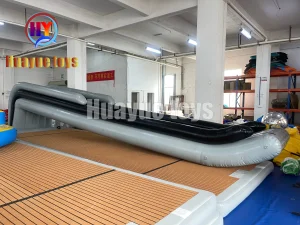
Custom-fit transom yacht slides matched to deck gunwale profiles, modular sea pools with jellyfish-protection mesh, and floating pontoon extensions. These setups double usable charter deck space and pack down into compact storage bags within tender garages.
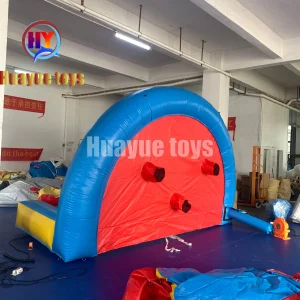
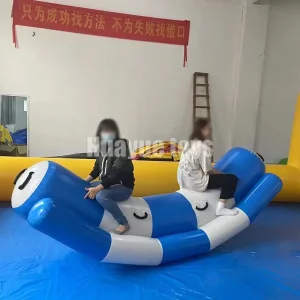
Turnkey floating aqua park courses with connected climbing towers, balance beams, giant seesaws, and obstacle arrays. Interlocking sleeve connectors and elastic bungee bridges provide gentle wave flex without pinching rider limbs.
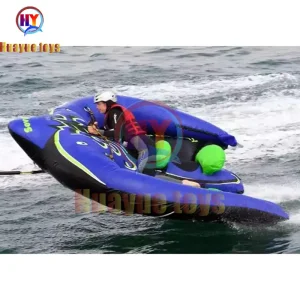
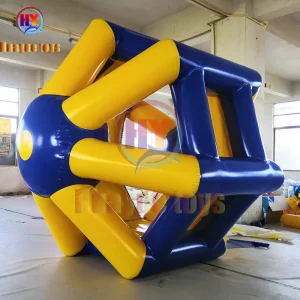
High-energy towable banana craft, rotating water disco platforms, and offshore bounce trampolines. Outfitted with reinforced chafe guards and extra-wide boarding steps for easy climbing in tidal surf zones.
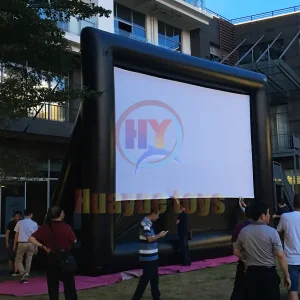
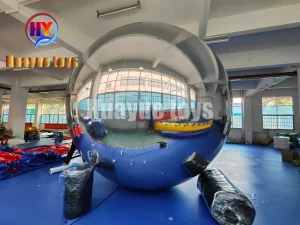
Floating projection screens, giant silver reflective mirror spheres, and custom branding stages for open-water film festivals, VIP product launches, and waterfront brand activations.
Clear, engineering-focused details on PVC specifications, power supply compatibility, safety compliance, and custom factory manufacturing.
Engineered water and terrestrial sports platforms built with multi-layer hot-air welding, reinforced anchor tabs, and heavy-duty ripstop PVC.