Explore high-velocity turn-key inflatables manufactured in our 6,250 m² Guangzhou facility, engineered specifically for resort waterfronts, commercial aqua parks, open lakes, and rental concessions.
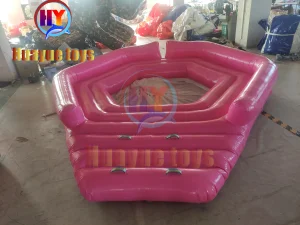
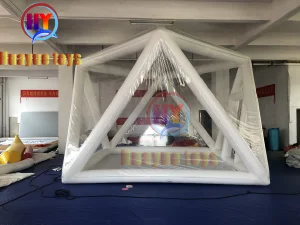
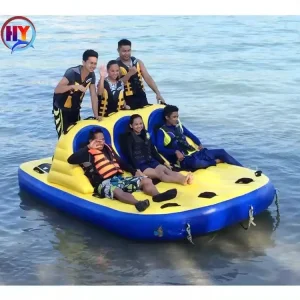
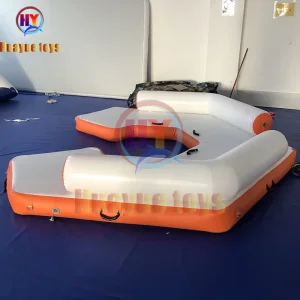

A rigorous examination of CapEx vs. OpEx economics, guest throughput engineering, and operational risk mitigation for waterfront developments across North America, the Mediterranean, Middle East, and Southeast Asia.
Unlike civil engineering water parks requiring concrete foundations, massive filtration facilities, and multi-year construction permitting, an inflatable water park on open water operates with approximately 85% lower initial CapEx. Commercial beach clubs, resort operators, and municipal concessions typically achieve full capital amortisation within a single 90- to 120-day high season, boasting operational EBITDA margins exceeding 60%.
Enterprise buyers require agile attraction assets. Our modular interlocking grid system allows operators to reconfigure elements between seasons—transforming a family-centric leisure circuit into a high-octane corporate obstacle course. Standardized heavy-duty linking flaps, marine-grade AISI 316 stainless steel D-rings, and universal eyelet spacing permit seamless future expansions without rendering legacy modules obsolete.
Coastal and lake authorities enforce stringent environmental regulations against permanent structural disturbances. Floating inflatable aqua parks represent a non-invasive, zero-dredging infrastructure footprint. Units anchor using eco-sensitive helical screws or deadweight sinkers that preserve benthic flora and seabed fauna, enabling straightforward municipal permitting and seasonal de-rigging.
Comprehensive alignment with global marine equipment and amusement standards, including European EN ISO 25649, EN 14960, and American ASTM F2374-21 directives.
Open-water deployments encounter severe dynamic wave actions, lateral currents, and gust surges. Our designs incorporate elastomeric shock-cord dampening harnesses connected to our multi-layered PVC anchoring bridles. This dissipates peak kinetic force by over 45%, preventing localized seam shear, valve blowout, or pontoon displacement during severe swell conditions.
Conforming to EN ISO 25649-1 requirements, every module features zero entrapment zones (critical 8mm–25mm finger and head entrapment clearance thresholds). Safety landing drop zones from slides and tower trampolines maintain a minimum 3.0-meter clear water perimeter. Elevated observation turrets and unobstructed low-profile walkways guarantee 100% continuous line-of-sight for on-duty lifeguards.
Large-scale elements (climbing towers, iceberg slides, giant blobbing launchers) are compartmentalized with separate, hermetically sealed air chambers. In the rare event of accidental puncture, adjacent buoyancy compartments maintain total structural floatation integrity, preventing structural collapse and allowing safe evacuation of guests to perimeter landing mats.
| Park Topology Level | Surface Area (m²) | Simultaneous Rider Capacity | Recommended Water Depth | Target Business Entity | Safety Standard Baseline |
|---|---|---|---|---|---|
| Boutique Resort Bay | 250 – 500 m² | 30 – 50 Riders | 1.8 m – 2.5 m | Luxury Coastal Resorts & Private Beach Clubs | EN ISO 25649 / ASTM F2374 |
| Commercial Midway Park | 800 – 1,500 m² | 80 – 140 Riders | 2.2 m – 3.2 m | Commercial Lakeside Attractions & Water Cable Parks | EN ISO 25649 Class C / CE |
| Mega Destination Park | 2,000 – 4,500+ m² | 180 – 350+ Riders | 2.5 m – 4.0 m | Municipal Waterfronts & Adventure Amusement Parks | EN 14960 / ISO 25649 / NFPA 701 |
The operational longevity of a floating water park hinges directly upon tensile fabric stability, UV stabilization, and weld cohesion under severe salt-fog and thermal expansion stress.
Plato commercial grade 0.90mm 1000D/840D heavy-duty polymer composite containing multi-axial polyester inner scrim.
European-imported CNC thermal fusion & high-frequency digital thermo-welding replaces manual chemical gluing.
Surgical-grade metal hardware engineered to eliminate galvanic corrosion in high-salinity oceanic environments.
With our modern 6,250 m² manufacturing plant located in Baiyun District, Guangzhou (15 minutes from CAN Airport), we invite global procurement officers to audit raw material warehouses, automated CNC cutters, and pressure-testing halls.
Every commercial order undergoes finite element stress simulation. 3D spatial models confirm guest transit flow, splash buffers, and tow line clearances before cutting a single square meter of fabric.
Before disassembling and maritime export packing, every single module is inflated in our climate-monitored facility for 48 consecutive hours. Electronic manometer sensors register pressure retention to rule out microscopic leaks.
We provide comprehensive mooring plans engineered for your seabed substrate—whether sand, bedrock, mud, or mooring buoy networks. Includes exact chain sizes, deadweight ballast tonnage, and elastic tether lines.
Upon request, senior Guangzhou Huayue installation engineers deploy internationally to oversee site layout, anchor rigging, diver coordination, electrical blower commissioning, and lifeguard safety drills.
Industrial turnkey products manufactured to EN 14960, CE, and ASTM specifications for resorts, event promoters, and sports complexes globally.
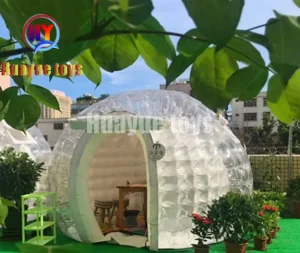
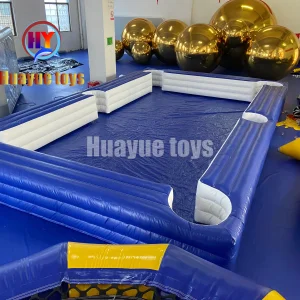
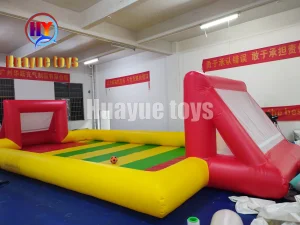
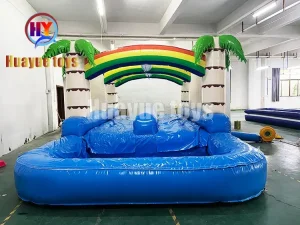
Clear, unvarnished technical guidance regarding material specifications, wind thresholds, sea water longevity, and operational maintenance.
Contact the Guangzhou Huayue technical engineering team today. Send us your site measurements, target capacity, and timeline to receive a complete 3D layout, anchoring bill of materials (BOM), and direct factory quotation.